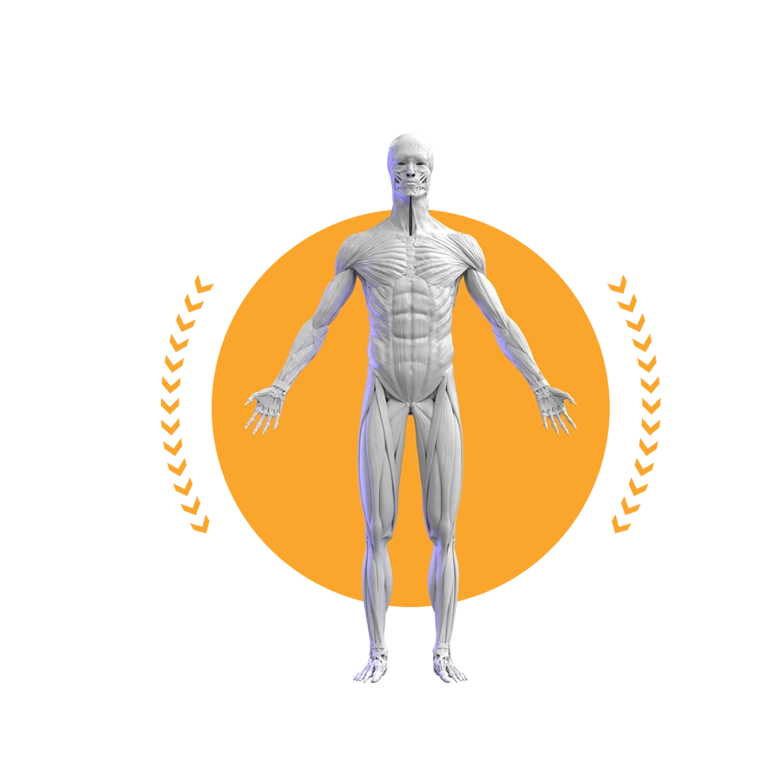
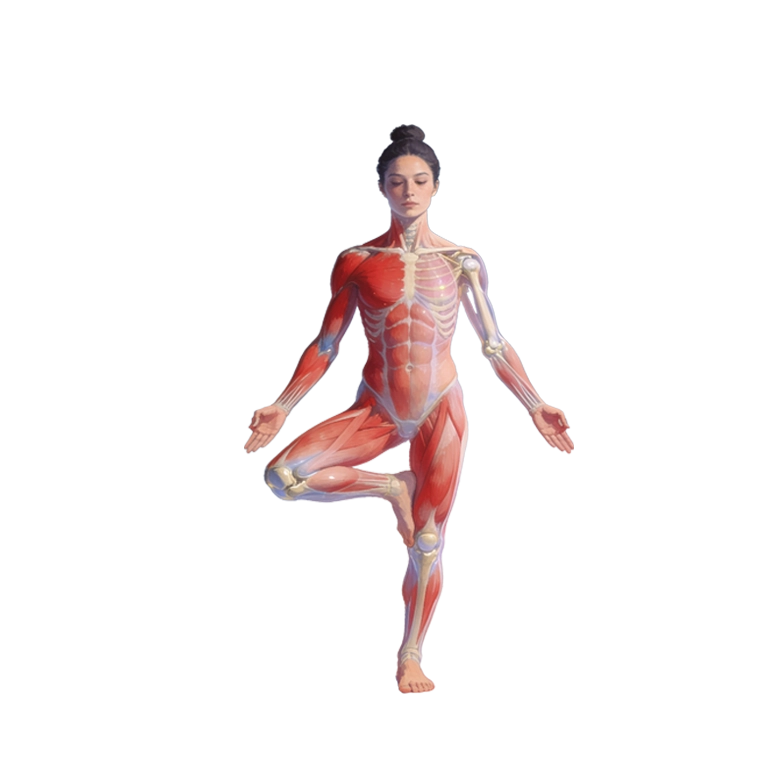


motion is holistic
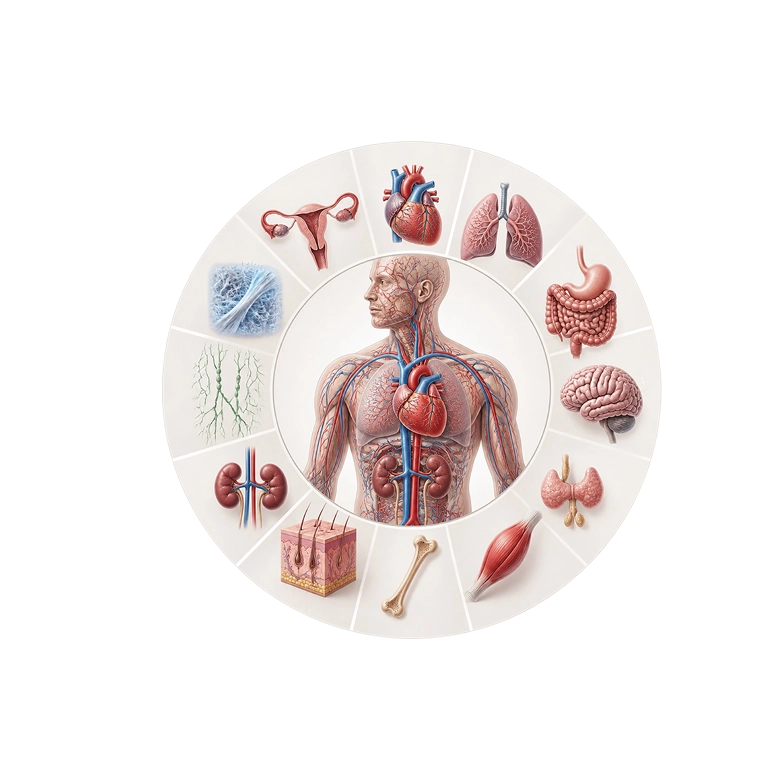
All our organ systems
are involved in motion






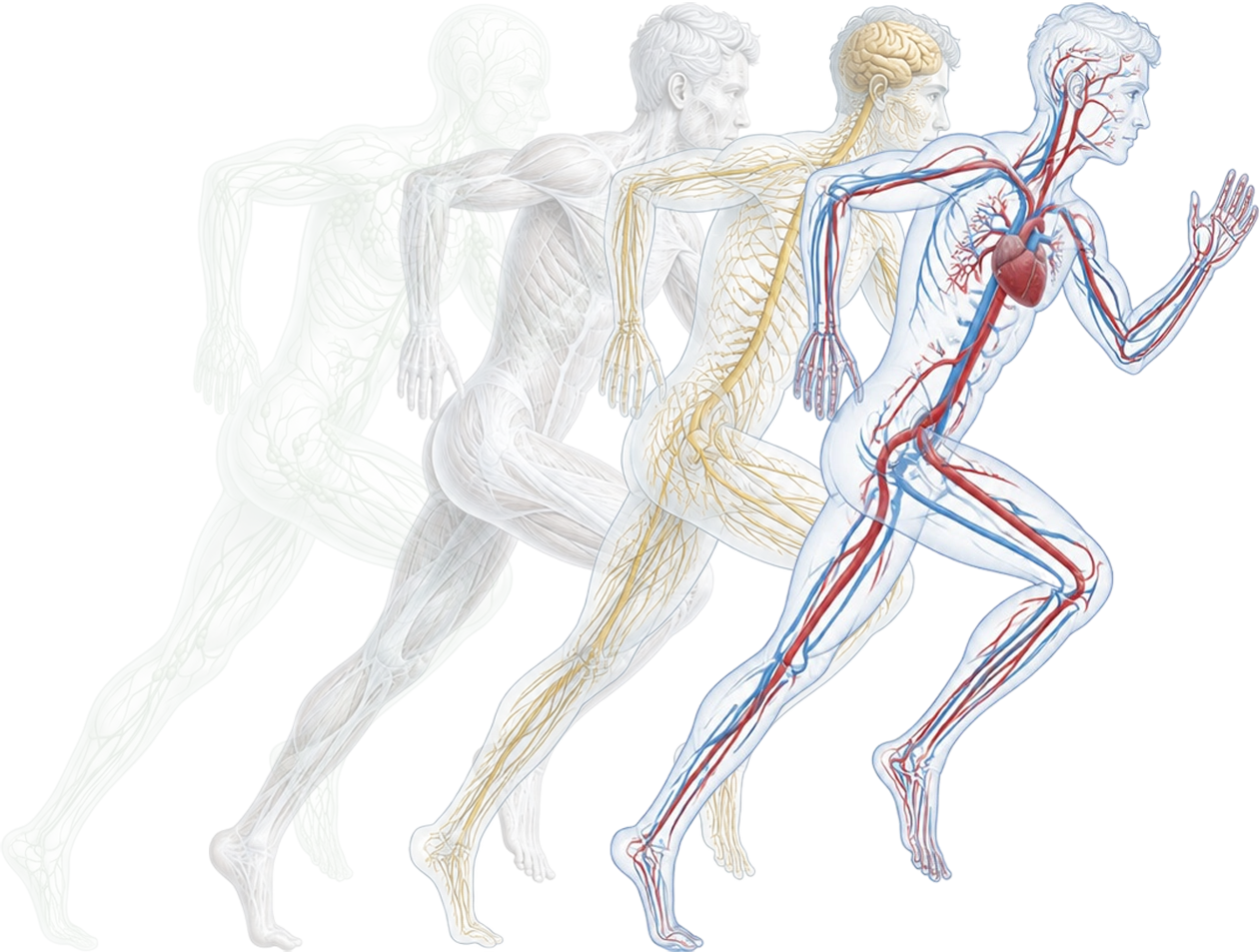
the body is one whole
What It Means
Practically
Knowing that all organ systems connect is one thing. Applying that insight in your daily life and work is another. If you accept the body as a whole, these three things apply.
First, everything you do affects your whole body, not just one part.
For example, taking a walk after dinner helps more than just digestion, and doing squats strengthens more than just your legs and core. These actions also influence your heart health, blood sugar, metabolism, mental clarity, sleep, and more.
Second, a problem in one area often connects to other areas in the body.
A sore knee, a tough yoga pose, or trouble sleeping are often a small part of something bigger. Because everything in the body is interconnected, pain and dysfunction can have their roots and influence elsewhere.
Third, physical activity is a powerful way to affect the whole body and all its systems.
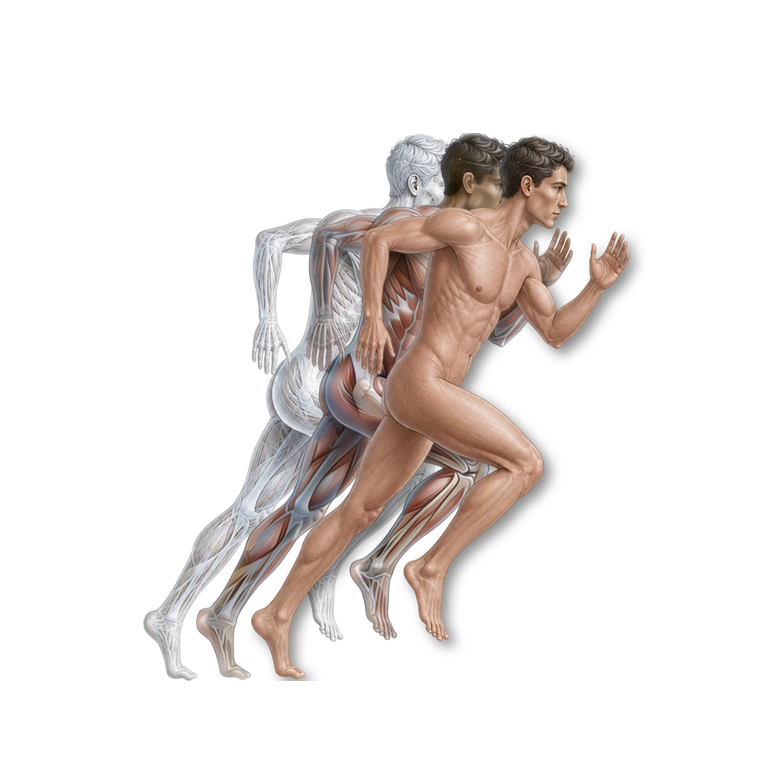
We are made to move. Walking, running, lifting, reaching, twisting, and breathing require the whole body. Movement shapes who we are and is the most direct way to influence every system simultaneously.
It might seem challenging at first to use these connections in your daily life or in your work as a therapist, instructor, trainer, or coach. But it’s easier than you might think. You already use them every day, often without realizing it, because they are always present.
all systems work together, always
During physical activity
all systems are involved
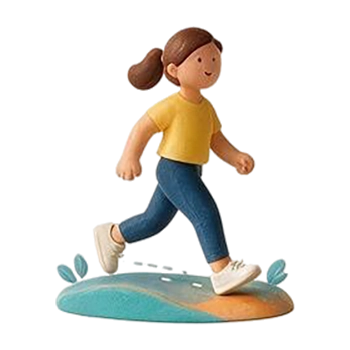
Walking
All your organ systems are active when you walk, but some are more involved than others. This graph shows their estimated relative involvement.
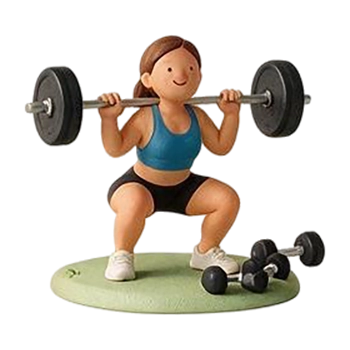
Squat (heavy)
All your organ systems are active when you do a heavy squat, but some are more involved than others. This graph shows their estimated relative involvement.
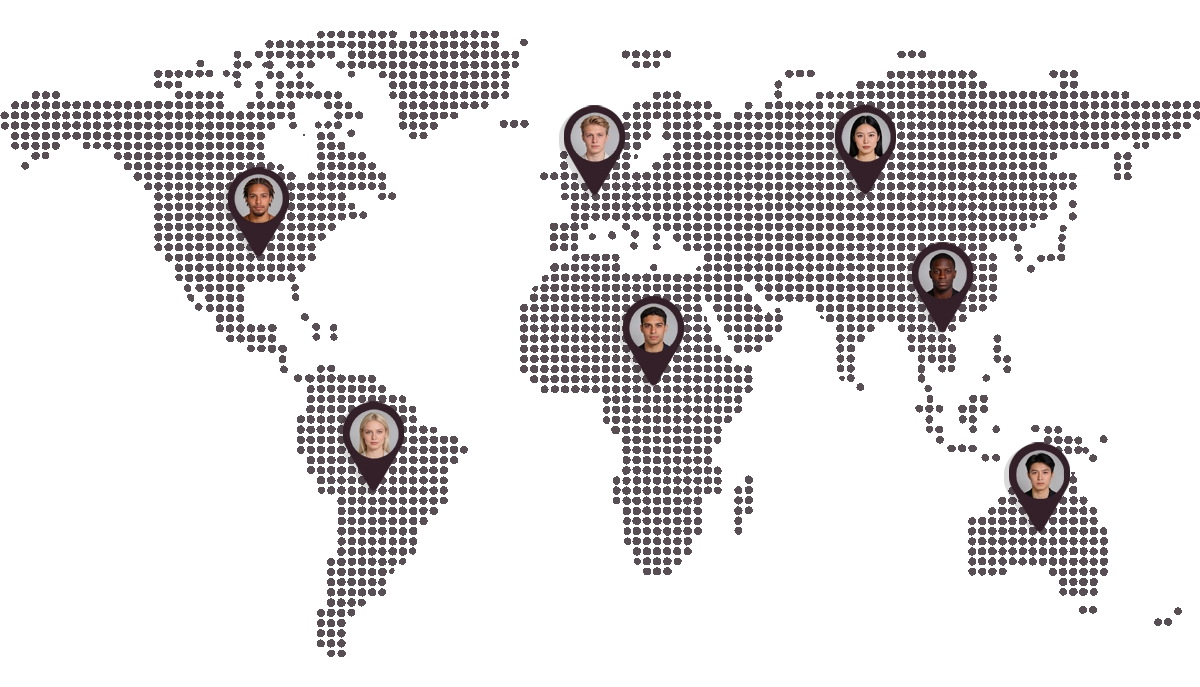
People worldwide
People suffer from MSK conditions
People too sedentary
Global costs due to sedentary lifestyle
author
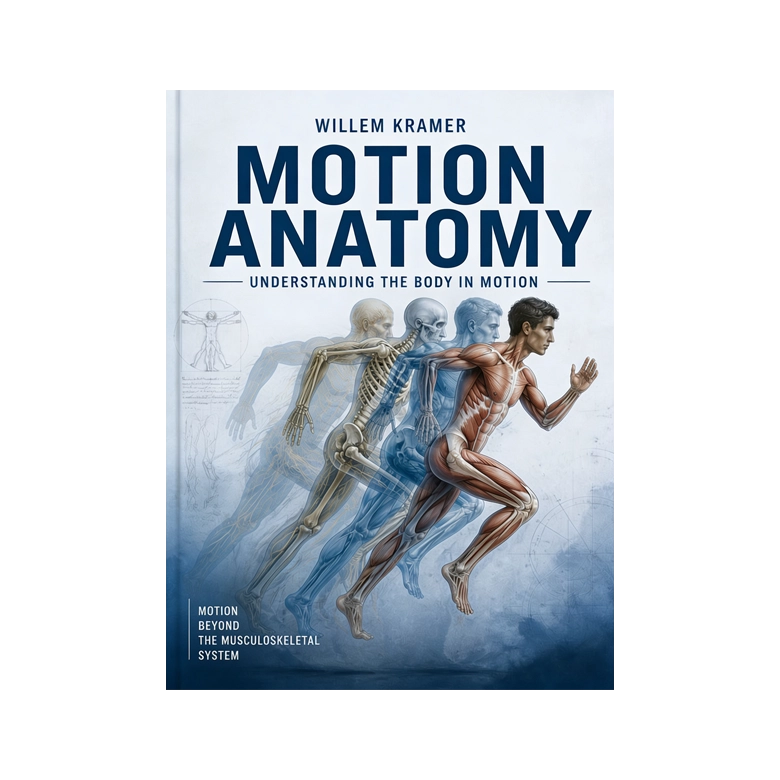
Willem Kramer
Willem is a physiotherapist trained in the Netherlands and a licensed massage therapist in the US. He has more than thirty years of experience working with professional athletes, entertainers, and executives. Willem created motion anatomy, a way of understanding anatomy based on how the body moves instead of by system or region, and he teaches this approach to therapists and movement professionals. He sees pain and dysfunction as issues that affect the whole body, working from the idea that all organ systems are connected and depend on each other.

free education
Coming Soon

join the movement
Move more, move better,
boost your wellness